Scientists calculated the average color of all light in the observable universe. It's a beige shade officially named "Cosmic Latte." The universe used to be bluer when it was younger—it's slowly getting more red as stars age and die.
The Universe Has a Color, and It's Fading
You probably think the universe is a tapestry of vibrant colors—fiery nebulae, blue stars, crimson galaxies. In reality, if you could blend every photon of light from every star into a single shade, you'd get a beige called Cosmic Latte. The cosmos isn't a rainbow. It's a cup of lukewarm coffee, slowly cooling.
- The Palette: The average color of all light in the observable universe is a specific shade of beige: #FFF8E7.
- The Shift: The universe was bluer in its youth. It grows redder and beiger as stars age and die.
- The Scale: This calculation considered the light from over 200,000 galaxies, a staggering census of stellar output.
- The Implication: You are not looking at a vibrant cosmos. You are witnessing a slow, universal fade to beige.
The Illusion
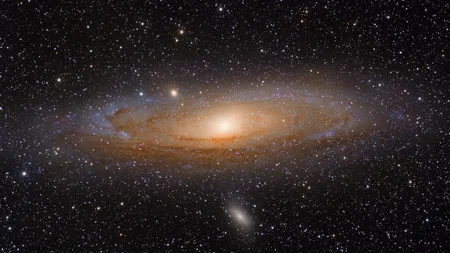
Our telescopes feed us a lie of spectacular variety. We see the brilliant blues of young, massive stars. We marvel at the deep reds of ancient giants and glowing hydrogen clouds.
This creates the visceral impression of an infinite, vibrant canvas. It suggests a universe bursting with energetic, colorful life. Your eyes are drawn to the fireworks, not the empty stage.
The Truth
In 2002, astronomers at Johns Hopkins University performed a staggering act of cosmic averaging. They took the light from over 200,000 galaxies. They blended it all together.
The result was not a brilliant white or a deep black. It was a pale, milky beige. They named it Cosmic Latte. This is the true color of everything. Every star, every galaxy, contributes to this single, muted hue.
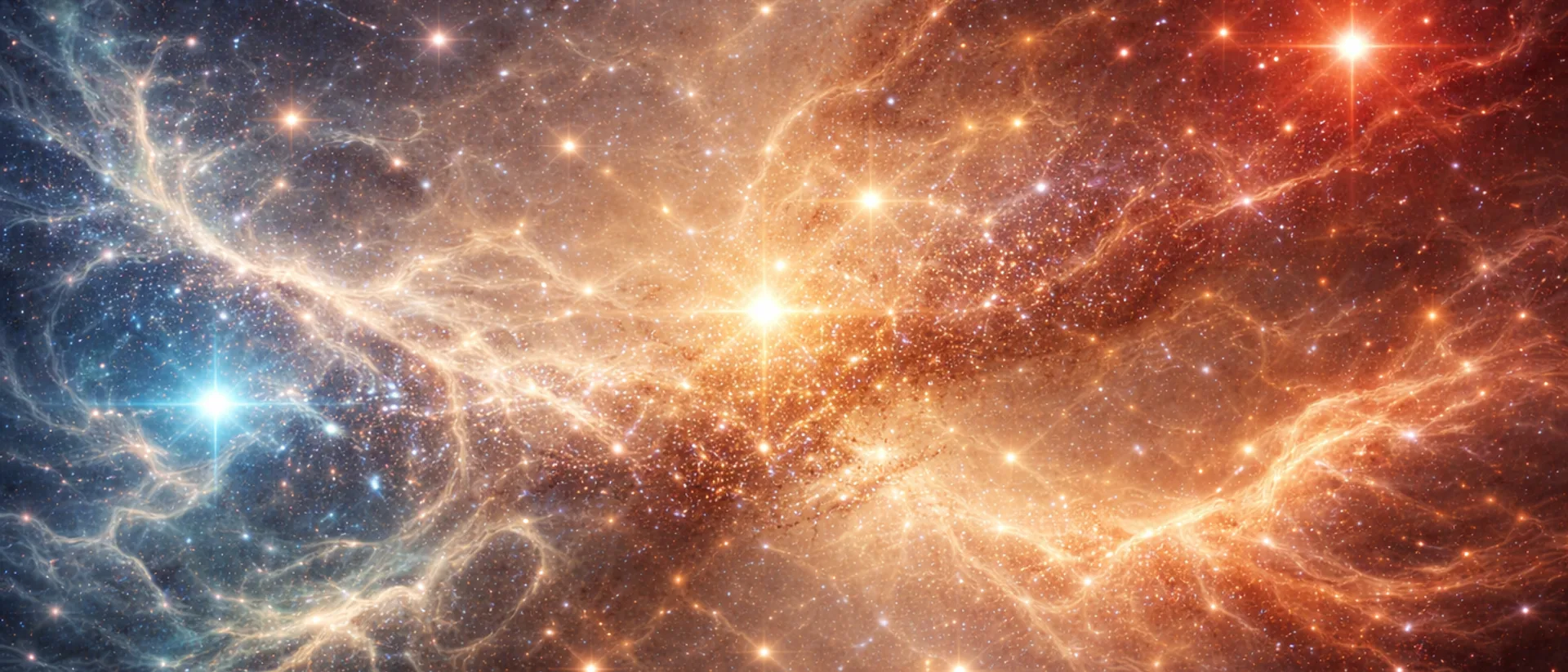
More haunting is the color's evolution. The early universe was dominated by hot, blue, short-lived stars. Their fierce light tinted the cosmos with a cooler, azure glow.
As eons passed, those blue stars burned out in spectacular supernovae. What remained were longer-lived, cooler, redder stars. The universe's palette is not static. It is slowly red-shifting into beige as its stellar population ages.
The Implication
This is not an artistic curiosity. It is a thermodynamic obituary written in light. The color shift is a direct measure of the universe's energy running down.
Blue light carries more energy than red light. The fading from blue to beige is a visual graph of cosmic entropy. You are living in an era still bright enough to see color, but the trend is inexorable.
Future civilizations, billions of years from now, will inherit a far redder, dimmer sky. The vibrant nebulas we photograph will have long dissipated. The universe's dominant hue will be a deeper, duskier shade of the beige we see today.
Your entire perception of the cosmos' vitality is framed by this fleeting, middle-aged moment. You caught the show after the brilliant blue opening act, but long before the final red curtain.
The Lingering Thought
What does it mean that the most fundamental property of light—its color—averages out to something so profoundly bland? We search the heavens for majesty and find, in the sum total, a shade you'd pick for a quiet living room wall. The universe isn't shouting. It's whispering in beige.
Frequently Asked Questions
Does this mean if I looked out a window in deep space, I'd just see beige?
What does the color fading imply about the ultimate fate of the universe?
If the universe is expanding and light is red-shifting, does that contribute to the beige?
Verified Fact
The finding was published in 2002 by a team of astronomers at Johns Hopkins University (Karl Glazebrook and Ivan Baldry). The color value (#FFF8E7) and the name 'Cosmic Latte' are formally recognized in astronomical literature. The explanation of the color shift due to stellar evolution is consistent with established astrophysics.
View source