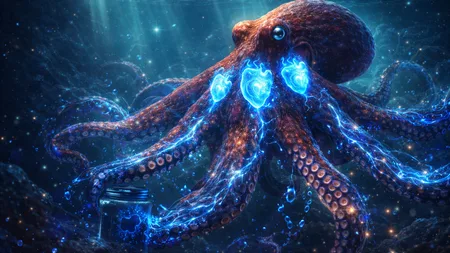
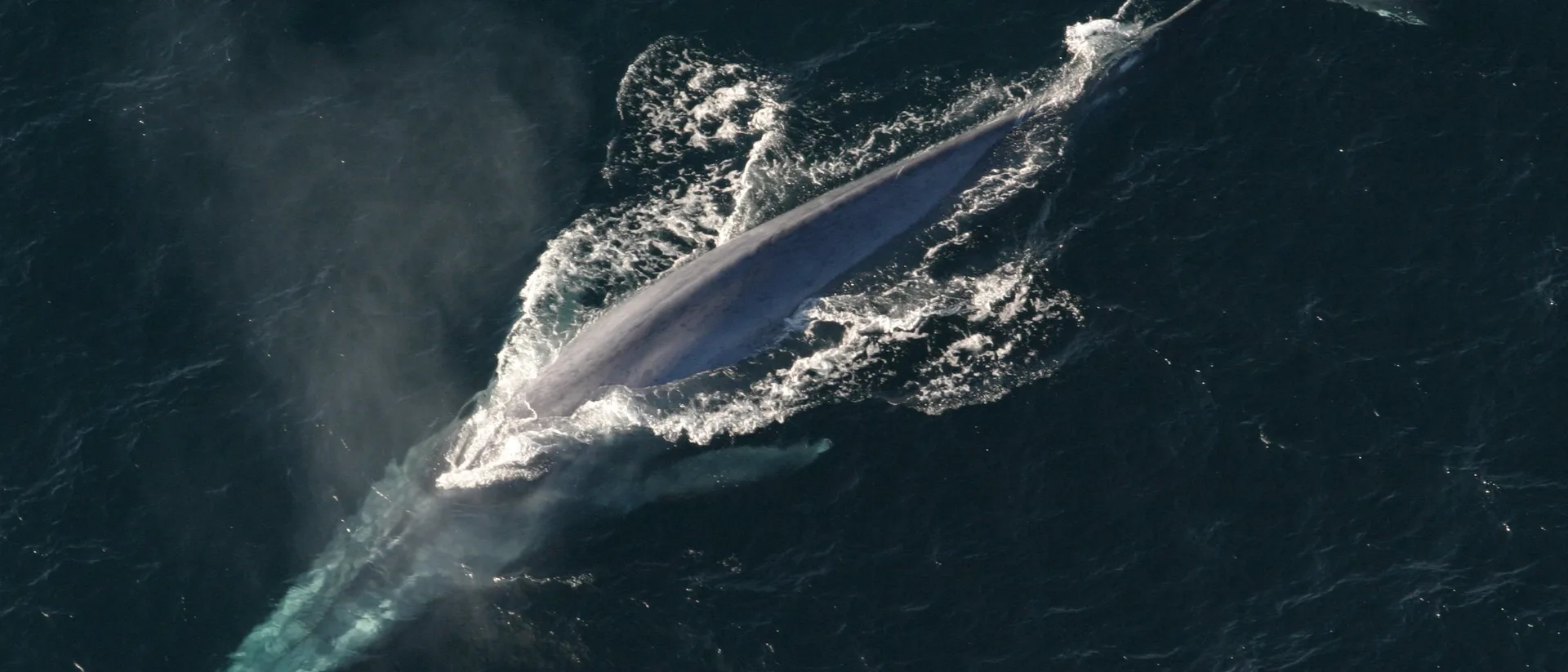
In 1997, NOAA recorded an underwater sound so loud it would've required an animal larger than a blue whale to make it.
The Sound That Shouldn't Exist
In 1997, a sound erupted in the deep Pacific that was louder than a blue whale's call. This wasn't just noise; it was a biological impossibility, a roar from something we have never seen and cannot explain.
A Voice From The Abyss
The sound, nicknamed "The Bloop," was detected by hydrophones over 3,000 miles apart. Its low frequency traveled through the deep ocean's SOFAR channel, a layer that acts as a global underwater microphone.
To be heard across an ocean basin, the source had to be unimaginably powerful. Calculations showed the energy required dwarfed that of any man-made explosion or geological event we typically record.
The Scale of the Impossible
Blue whales are the largest animals to ever exist. Their calls can reach 188 decibels, louder than a jet engine.
The Bloop was louder. Much louder. The physics were clear: to make that sound, an animal would need vocal apparatus larger than the whale itself. It suggested a creature of mythic proportions, lurking in the perpetual dark.
When Monsters Become Maps
For years, the leading theory pointed to a colossal, unknown sea creature. The sound's profile matched that of a living thing, not an earthquake or ice calving.
It forced science to confront a haunting question: had we recorded the call of a real-life leviathan? The deep ocean, 80% of which is unmapped, suddenly felt vastly more alien and unknown.
The Mystery That Redefined Mystery
In 2012, NOAA scientists concluded the sound matched that of a massive icequake—a giant iceberg cracking and fracturing. The case was officially closed.
Yet the echo remains. The Bloop exposed the true frontier: not outer space, but the alien world beneath our ships. It proved our planet still holds phenomena so vast they masquerade as monsters before we understand them.
We solved the sound, but not the feeling it evoked. For a moment, we listened to the deep and heard a ghost—a reminder that reality, in its rawest form, is always stranger than the myths we invent to explain it. The ocean didn't show us a monster; it showed us how small our map of the possible really is.
Frequently Asked Questions
What exactly was The Bloop sound?
Was The Bloop really from a giant sea monster?
How loud was The Bloop compared to a blue whale?
Where was The Bloop sound recorded?
Verified Fact
The fact is accurate as stated. NOAA did record the sound (The Bloop) in 1997. The initial analysis showed its acoustic profile was consistent with a biological source, and its amplitude suggested an entity larger than any known animal. The later icequake theory explains the source but does not change the initial, mind-bending observation.
View sourceRelated Topics
More from Science