No one was burned at the stake in Salem. Nineteen were hanged. One man, Giles Corey, was slowly pressed to death with stones over two days. His last words were "more weight."
More Weight
Everyone knows the Salem witches were burned at the stake. Everyone is wrong. What actually happened was worse — slower, more deliberate, and far more personal.
The Myth of Fire
Not a single person was burned at the stake during the Salem witch trials of 1692. Witch burning was a European practice, common in Germany, France, and Switzerland. The American colonies used the rope.
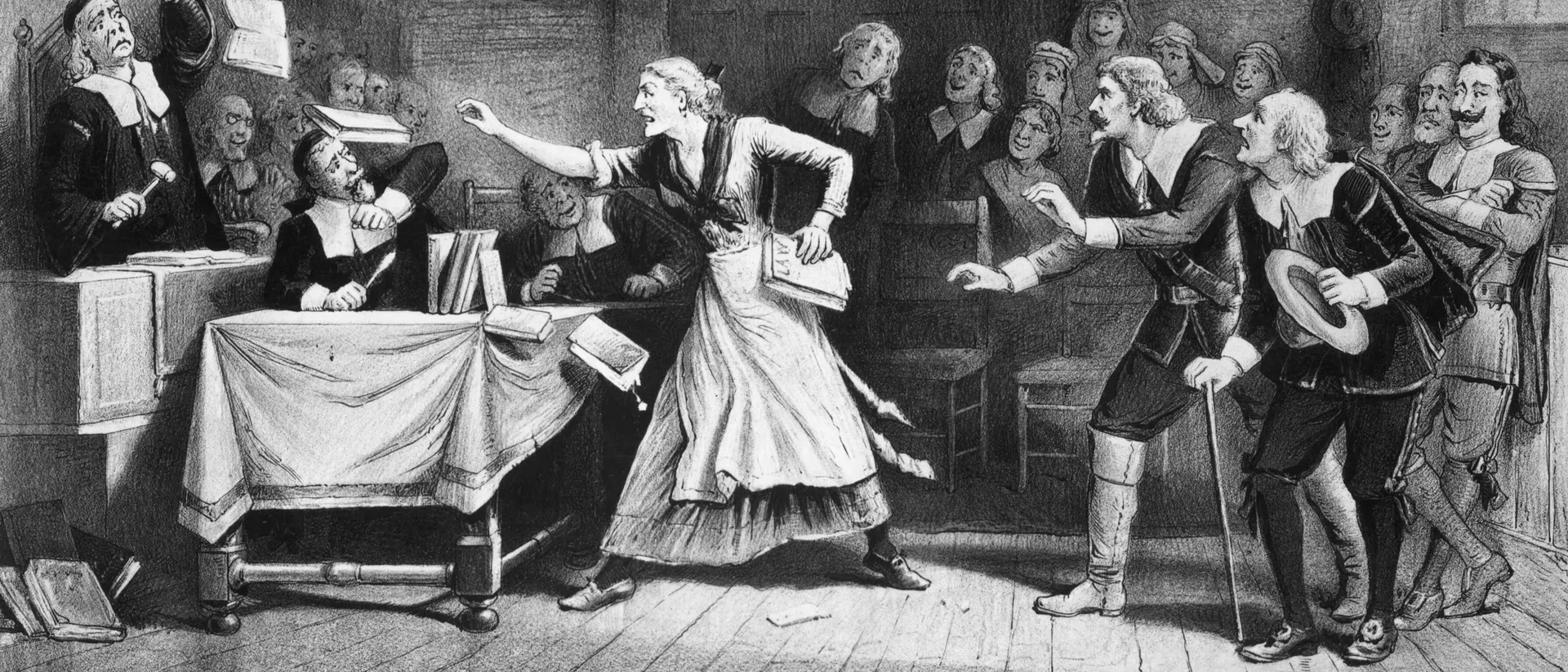
Nineteen men and women were hanged at Proctor's Ledge in Salem Village between June and September 1692. They were convicted on the testimony of teenage girls who claimed to see spectral evidence — ghosts and demons that only they could perceive.
Giles Corey
Giles Corey was 81 years old when he was accused of witchcraft. He refused to enter a plea — not out of stubbornness, but because under colonial law, a person who refused to plead could not be tried, which meant his property could not be seized by the court.
The authorities responded with peine forte et dure — a medieval punishment in which the accused was laid on the ground and heavy stones were placed on their chest, one by one, until they either entered a plea or died.
"More Weight"
Over the course of two agonizing days, stones were piled onto Corey's body. Sheriff George Corwin reportedly stood on the stones to increase the pressure. Witnesses said Corey's tongue was pressed out of his mouth, and the sheriff pushed it back in with his cane.
They asked him to plead. He refused. The only words he spoke were "more weight."
He died on September 19, 1692. His property passed to his sons, exactly as he intended.
The Aftermath
In total, 200 people were accused. Twenty were killed. Five others died in jail. Within five years, the colony publicly admitted the trials were a mistake. In 1711, the colonial legislature passed a bill restoring the good names of the accused and providing financial restitution to their families.
The apology came nineteen years too late. The bodies had already been dumped in shallow, unmarked graves on the hillside — denied proper burial because they were, officially, agents of the devil.
Frequently Asked Questions
Were witches burned at the stake in Salem?
Who was Giles Corey and what happened to him?
How many people were killed in the Salem witch trials?
Did Salem ever apologize for the witch trials?
Related Topics
More from Time