You are literally not the same person you were a decade ago—physically. Your skeleton is replaced every 10 years, your liver every 5 months, your skin every 2-4 weeks. The atoms that made you as a child are now scattered across the planet.
The Person You Remember Is Already Gone
You probably think you carry the same physical body through life, a constant vessel for your consciousness. In reality, the body you inhabit today is a temporary collection of borrowed atoms, and the one you had as a child has long since disintegrated into the world.
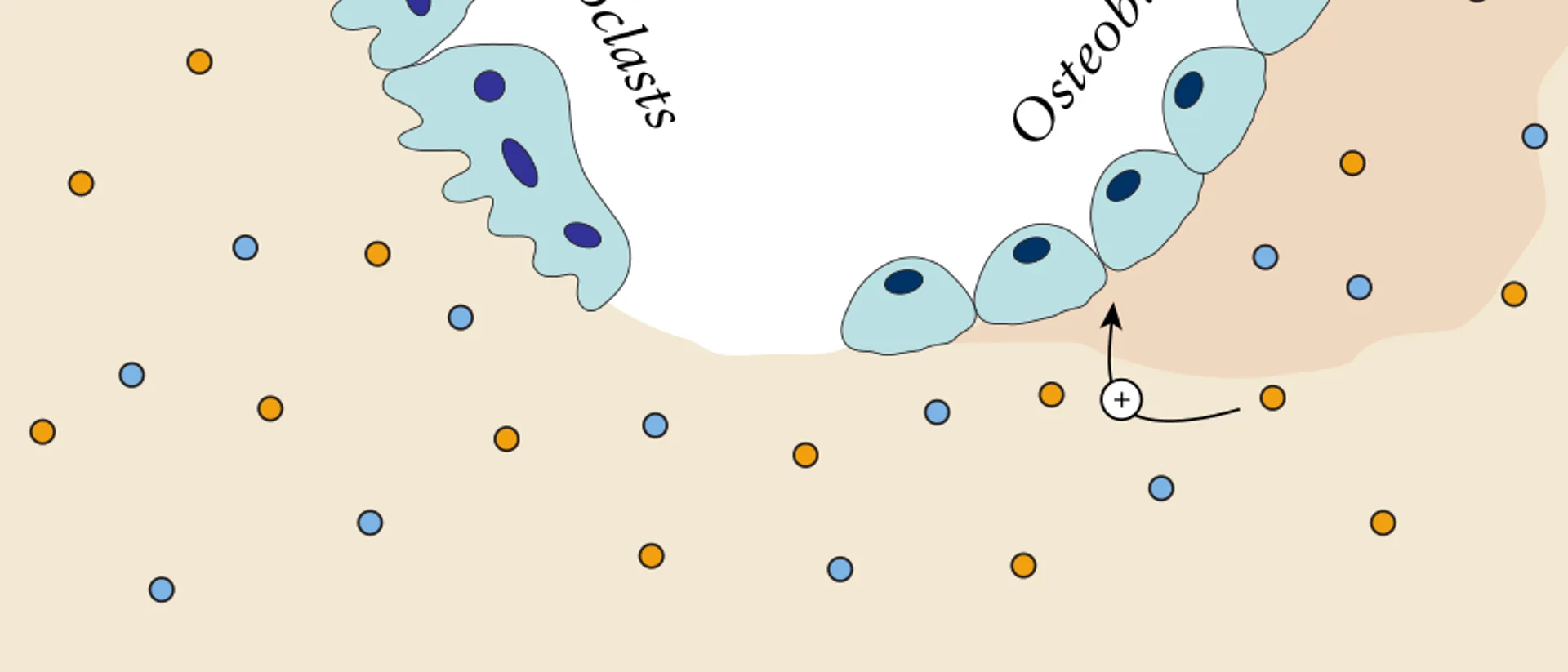
- The Skeleton: Your entire bony framework is replaced, cell by cell, over a decade.
- The Liver: This vital organ regenerates itself completely every five months.
- The Skin: Your outer layer sheds and renews itself every two to four weeks.
- The Atoms: The specific carbon, hydrogen, and oxygen atoms that composed you years ago are now part of oceans, trees, and other people.
The Illusion
We operate under a powerful, visceral sense of continuity. You feel like the same entity that experienced childhood birthdays and teenage heartbreaks.
Your memories, your scars, your sense of self—they all whisper a story of permanence. This creates the unshakable conviction that you are a persistent object moving through time.
The Truth
You are not an object. You are a process. A roaring, churning cascade of biochemical exchange with the environment.
At the atomic level, you are more like a whirlpool in a river than a stone. The pattern of the whirlpool persists, but the water molecules constituting it are constantly flowing in and out. The 'you' of ten years ago has literally been exhaled, shed, excreted, and replaced.
Your body is engaged in a perpetual, silent trade with the planet. You breathe out atoms that become part of the atmosphere. You shed skin cells that feed dust mites. You are, right now, woven from atoms that were once soil, seawater, and sunlight.
The Implication
This forces a haunting question: what is the 'self' if its physical substrate is entirely transient? You are not the atoms themselves, but the fleeting, dynamic arrangement they currently hold.
Your identity is a story told by a pattern of information written in ever-changing matter. The continuity you feel is not one of substance, but of narrative—a thread of consciousness stitched through a sequence of different physical forms.
This makes every human a literal incarnation of the Ship of Theseus paradox. If every plank of a ship is replaced over time, is it still the same ship? If every atom in you is replaced, are you still the same person?
So the next time you look at an old photograph, remember: you are not looking at a younger version of yourself. You are looking at a stranger made of different stuff, whose atoms now drift in the wind and flow in the rivers. The person in that photo is gone. The question is, who are you now?
Frequently Asked Questions
If all my atoms are replaced, what connects 'me now' to 'me then'?
Does this mean I'm literally made of stardust?
What does this imply about death?
Verified Fact
Cell turnover rates are well-established in human biology. The 10-year figure for skeletal renewal is an average; some bones remodel faster. The concept of atomic replacement is fundamental to metabolism and isotopic studies.
View source