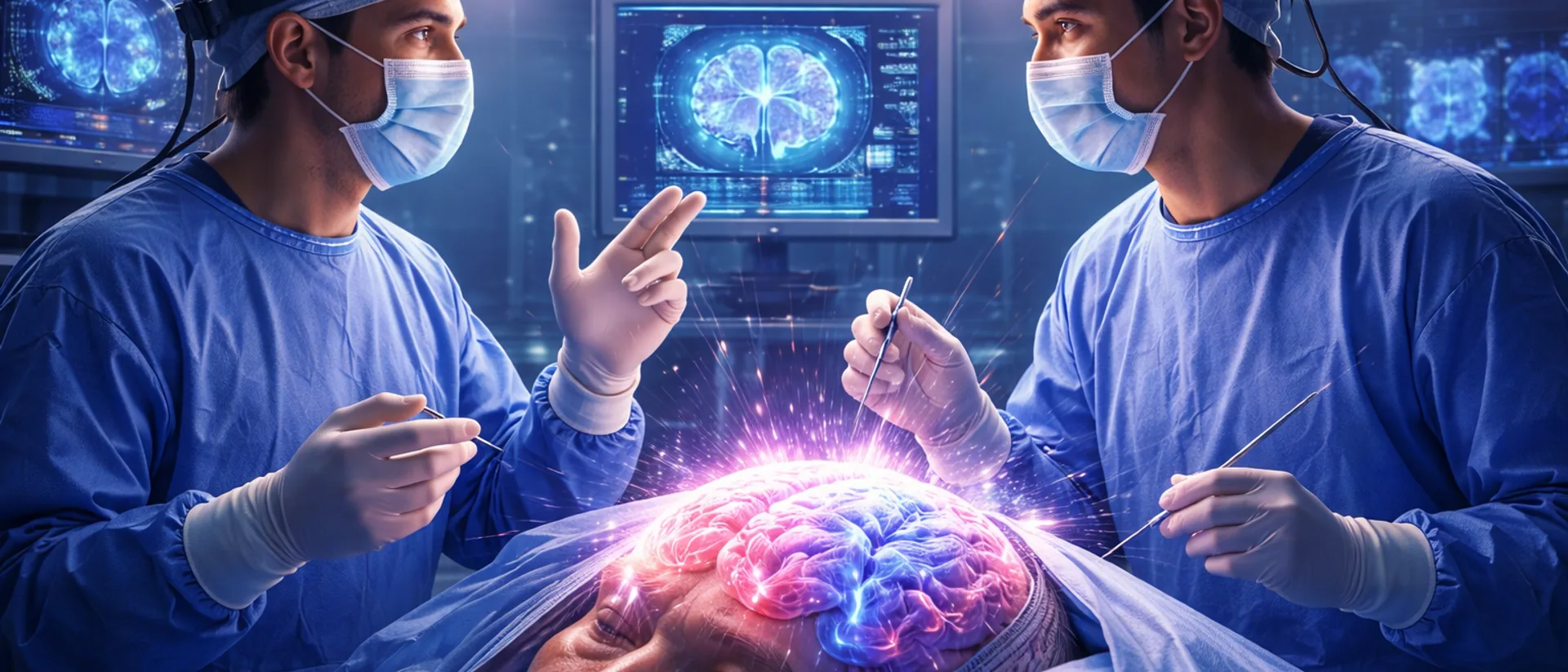
The organ that processes all your pain sensations has no pain receptors itself. Surgeons can operate on a conscious patient's brain while they chat about the weather. The brain literally cannot feel itself being touched or cut.
The Organ That Feels Your Pain Cannot Feel Itself
You probably think your consciousness is a direct, physical experience anchored in the flesh of your brain. In reality, the three-pound universe that generates every sensation you've ever known is itself completely numb. The brain is the only organ that experiences the world second-hand, through electrical whispers from distant outposts.
- The Paradox: The sole organ responsible for the entire human sensory experience has zero sensory receptors of its own.
- The Procedure: Neurosurgeons can and do operate on fully conscious patients, who can describe sensations as their own brain tissue is manipulated.
- The Implication: The vivid, visceral feeling of "being" inside your body is a simulated broadcast, not a direct physical reality.
- The Scale: Every memory, emotion, and ache you've ever felt was processed in a silent, dark, and senseless vault.
The Illusion
You feel your hand on the keyboard. You feel the ache in your back. You feel the warmth of the sun. This feels like a direct, unmediated experience of a physical world.
Your intuition screams that consciousness is a tangible thing, located somewhere behind your eyes. It feels solid, present, and intimately connected to the meat of your body.
The Truth
Your brain is a prisoner in a silent, dark skull. It has no pain receptors (nociceptors), no touch receptors (mechanoreceptors), and no temperature sensors.
Everything it "knows" about the outside world—or the inside of your body—arrives as encoded electrical signals from nerves far away. The searing pain of a stubbed toe is not pain until your brain decodes the signal and generates the subjective experience of pain for you.
During an awake craniotomy, a patient can have their skull opened and brain exposed. They are given local anesthesia for the scalp and skull—which do have pain receptors. But once the surgeon touches the brain itself, the patient feels nothing.
They can talk, recall memories, or identify objects while a surgeon probes the very tissue creating those thoughts. The brain literally cannot feel itself being touched, cut, or burned.
The Implication
This means the "you" that feels present in your body is a ghost in the machine. Your sense of physical self is a sophisticated simulation run on insensate hardware.
All the richness of human experience—love, grief, the taste of chocolate, the color red—is generated in a place that has never directly felt, tasted, or seen anything. The qualia of existence are a story told to itself by a blind, deaf, and numb narrator.
It creates a staggering ontological divide. The thing that is you—your mind—is not experiencing the physical world. It is experiencing a perfectly rendered model of the world, built from abstract data.
So where, exactly, are you? Are you the silent, numb tissue, or are you the breathtakingly vivid simulation it generates? And if the simulator itself cannot feel, what does that make the feeling?
Frequently Asked Questions
If the brain can't feel pain, what is a headache?
Does this mean our consciousness is completely disconnected from physical reality?
What does this imply about the mind-body problem?
Verified Fact
Confirmed by standard medical neuroscience. Awake brain surgery (awake craniotomy) is a common procedure for mapping eloquent brain areas. The brain parenchyma itself lacks nociceptors.
View source